Separation Anxiety Dog Training: A Gentle, Step-by-Step Plan
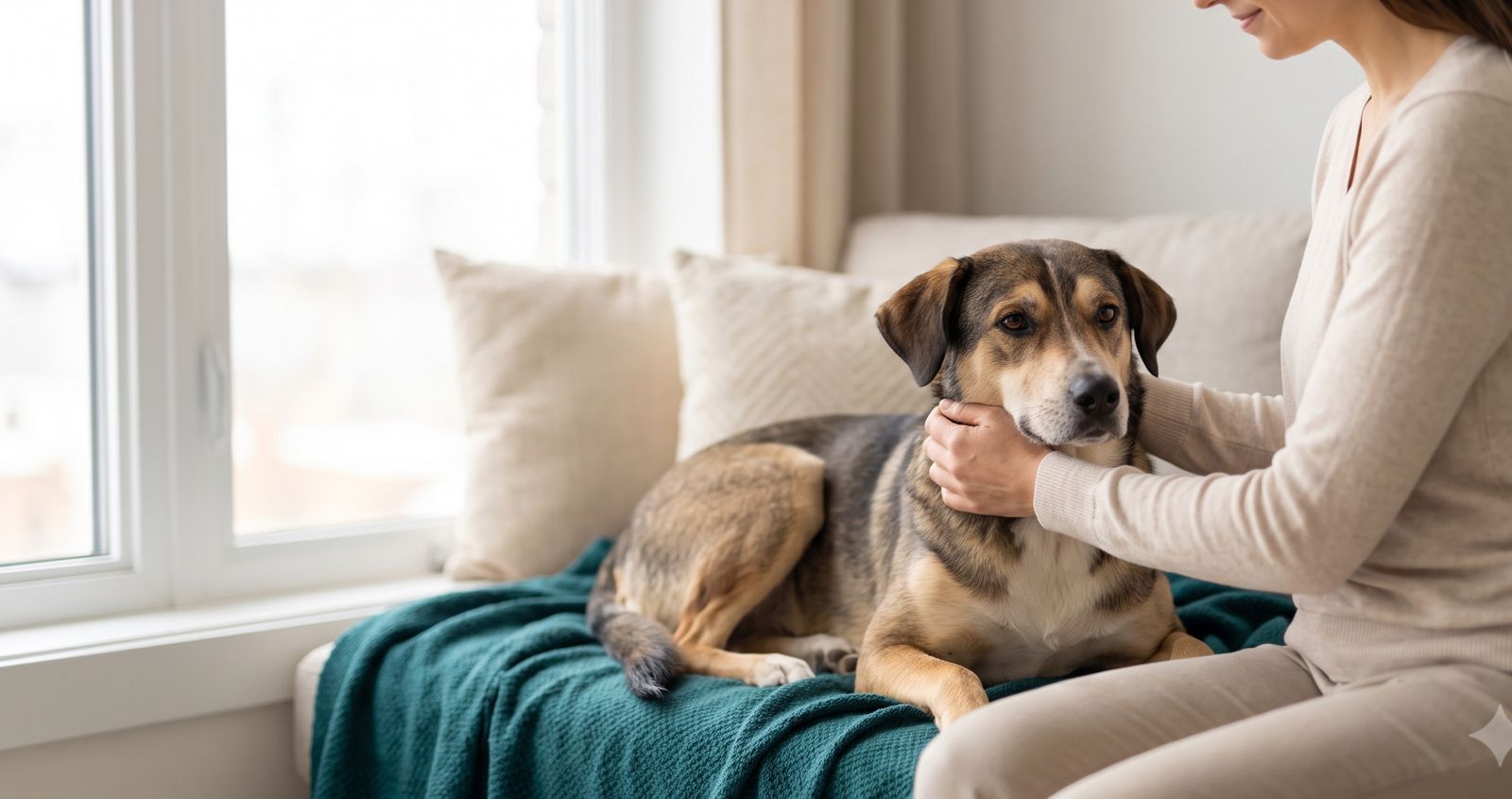
The chewed doorframe isn't revenge. The howling isn't stubbornness. True separation anxiety is panic — a dog who genuinely believes he can't survive being alone. That matters because you can't punish panic away; you can only teach, gradually, that alone is safe. That's what separation anxiety dog training actually is.
First: is it actually separation anxiety?
Set up a phone camera and leave for 20 minutes. Then compare:
- Boredom looks like: casual exploring, a nap, some recreational chewing of whatever was left out. Fix: exercise before you leave and enrichment while you're gone.
- Separation anxiety looks like: pacing and vocalizing that starts within minutes, drooling, scratching at exits, ignoring food entirely. A dog too panicked to eat a treat is not bored.
Severe cases — self-injury, escape attempts through windows — warrant a call to your vet or a certified separation anxiety trainer before any home program. Medication plus training changes lives; there's no shame in it.
Step 1: Stop rehearsing panic
Every full-blown panic session strengthens the pattern. During training, real absences need coverage: doggy daycare, a sitter, a neighbor, your WFH schedule. This is the hard logistical truth that makes everything else work.
Step 2: Kill the departure drama
Keys, shoes, jacket — grab them randomly through the day and then… don't leave. Sit back down. The predictors stop predicting. And make your own arrivals boring: calm hello after the wiggles stop, not a reunion scene from a war movie.
Step 3: Departures measured in seconds
This is the heart of the plan. Walk out the door, close it, come back in — before the panic starts. For some dogs that's 10 seconds; for some it's 2. Repeat until boring, then add a few seconds. A sample week might look like: 5s → 15s → 30s → 90s → 3min → 8min → 15min, always at a pace where your camera shows a calm dog. One panicked session sets you back a week, so slower genuinely is faster.
Step 4: Build an independence habit at home
Anxious dogs often shadow their person room to room. Reward settling on a mat across the room. Give a lick mat behind a baby gate while you cook. Teach that "not touching you" and "abandoned" are different things. (A dog who loves his crate has a head start — see our 14-day crate plan — though many anxious dogs do better gated in a room than crated.)
What makes it worse
- Punishment after the fact. The guilty look is appeasement, not guilt. Scolding adds fear of you to fear of alone.
- "Letting him cry it out." Flooding a panicking dog teaches that panic is justified.
- Skipping steps on a good day. One 8-hour absence after a good week restarts the clock.
Progress is measured in weeks, not days — but it is remarkably reliable when the plan is followed. The dog who panics at 30 seconds today can genuinely nap through your workday in a couple of months. Gentle wins this one.
Free: the 7-Day Enrichment Challenge
One quick game a day that tires your dog out more than an hour at the park. No credit card, just a calmer dog by Sunday.
Free 7-day Enrichment Challenge. No credit card required.
Ready for the full system? The Puppy Starter Course — 8 modules, 25+ short videos, 5 printable guides — is $49 with a 14-day no-questions refund.